


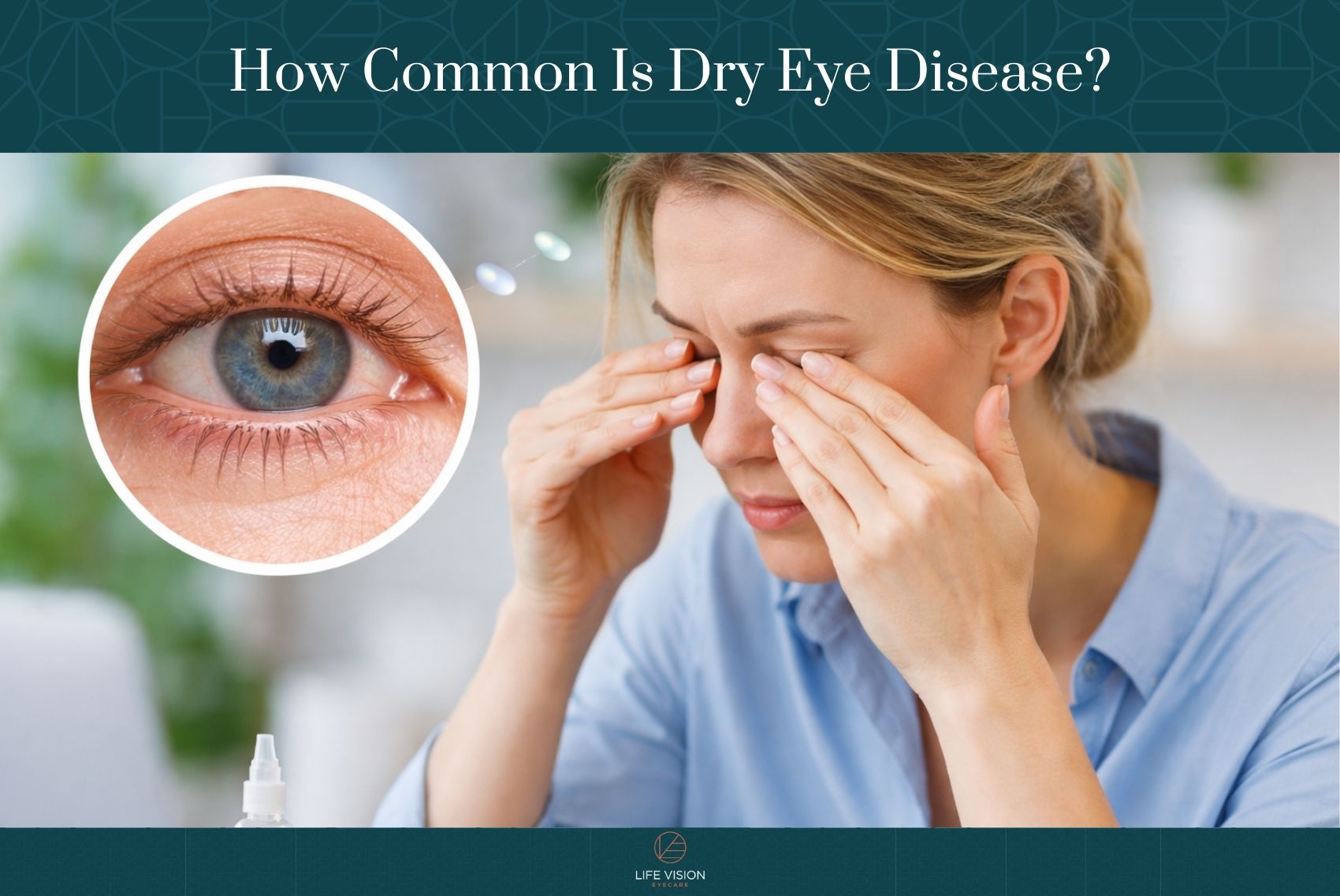
Dry Eye Disease is one of the most common eye conditions affecting adults today, yet many people don’t realize they have it. Burning, gritty, watery, or irritated eyes are often brushed off as temporary discomfort, but for millions of Americans, these symptoms are signs of a chronic condition that deserves professional care.
At Life Vision Eyecare, we regularly diagnose and manage Dry Eye Disease for patients in Stevensville and the surrounding Michigan communities. Understanding how common dry eye is—and why it happens—is the first step toward lasting relief.
What Is Dry Eye Disease?
Dry Eye Disease occurs when your eyes do not produce enough tears or when the tears evaporate too quickly. Tears are essential for maintaining eye comfort, clear vision, and overall eye health. When the tear film becomes unstable, it can lead to inflammation, irritation, and fluctuating vision.
Dry eye is often a chronic and progressive condition, meaning it can worsen over time without proper diagnosis and treatment.
How Common Is Dry Eye Disease?
Dry Eye Disease is extremely common:
- More than 16 million Americans have been formally diagnosed with dry eye
- Millions more experience symptoms without seeking treatment
- It is one of the leading reasons patients visit an eye doctor
Dry eye can affect people of all ages, but it becomes increasingly common as we get older. Women, particularly after menopause, are more likely to experience dry eye symptoms due to hormonal changes.
Why Is Dry Eye Becoming More Common?
Several modern lifestyle factors have contributed to the rising prevalence of Dry Eye Disease:
Increased Screen Time
Staring at computers, smartphones, and tablets reduces blink rate, leading to faster tear evaporation and Meibomian gland (a type of tear gland) atrophy.
Aging
Tear production naturally decreases with age.
Environmental Factors
Dry indoor air, heating systems, air conditioning, wind, and smoke can all worsen symptoms.
Contact Lens Wear
Long-term contact lens use can disrupt the tear film and initiate Meibomian gland atrophy.
Medical Conditions & Medications
Autoimmune diseases, allergies, antihistamines, decongestants, antidepressants, and blood pressure medications can all contribute to dry eye.
Signs and Symptoms of Dry Eye Disease
Dry eye symptoms can vary from mild to severe and may include:
- Burning or stinging sensations
- Gritty or sandy feeling in the eyes
- Redness or irritation
- Excessive tearing (a reflex response to dryness)
- Blurry or fluctuating vision
- Eye fatigue, especially during screen use
- Discomfort while wearing contact lenses
- Reduced contact lens wear time
If you experience any of these symptoms regularly, a comprehensive eye exam is essential.
Why Early Diagnosis Matters
Untreated Dry Eye Disease can lead to:
- Chronic eye inflammation
- Increased risk of eye infections
- Damage to the corneal surface
- Damage to the Meibomian glands
- Reduced quality of vision
- Difficulty with daily activities like reading or driving
Early diagnosis allows for personalized treatment that can significantly improve comfort and protect long-term eye health.
Dry Eye Disease Q&A
Q: Is dry eye just a normal part of aging?
A: While dry eye becomes more common with age, it is not something you should ignore or “just live with.” Effective treatments are available at any stage.
Q: Why do my eyes water if they’re dry?
A: Excessive tearing is often a reflex response to irritation. These tears lack the proper oils needed to stay on the eye’s surface, so they don’t relieve dryness.
Q: Can dry eye affect my vision?
A: Yes. An unstable tear film can cause blurry or fluctuating vision, especially during screen use or reading.
Q: Is dry eye a permanent condition?
A: Dry eye is often chronic, but symptoms can be successfully managed with the right treatment plan.
Q: Do over-the-counter eye drops cure dry eye?
A: Artificial tears can temporarily alleviate eye irritation, but they are not meant to treat any eye condition. Dry eye is a chronic eye condition that often worsens over time. Chronic dry eye usually requires targeted treatment.
Q: Can dry eye be treated at Life Vision Eyecare?
A: Absolutely. We offer thorough evaluations and customized treatment plans to help relieve symptoms and improve eye comfort.
When Should You See an Eye Doctor?
You should schedule an eye exam if:
- Symptoms persist for more than a few days
- Over-the-counter drops aren’t helping
- Your vision fluctuates or worsens
- Eye discomfort interferes with daily life
Dry Eye Disease is manageable, and relief often starts with a simple exam.
Schedule a Dry Eye Evaluation Today
If you’re experiencing dry, irritated, or uncomfortable eyes, Life Vision Eyecare is here to help. Our team is committed to providing personalized, compassionate eye care using modern diagnostic tools and treatment options.
Contact Information
Life Vision Eyecare
5770 Red Arrow Hwy
Stevensville, MI 49127
📞 Phone: (269) 367-2626
🌐 Website: lifevisioneyecare.com
📅 Book an Appointment: CLICK HERE