


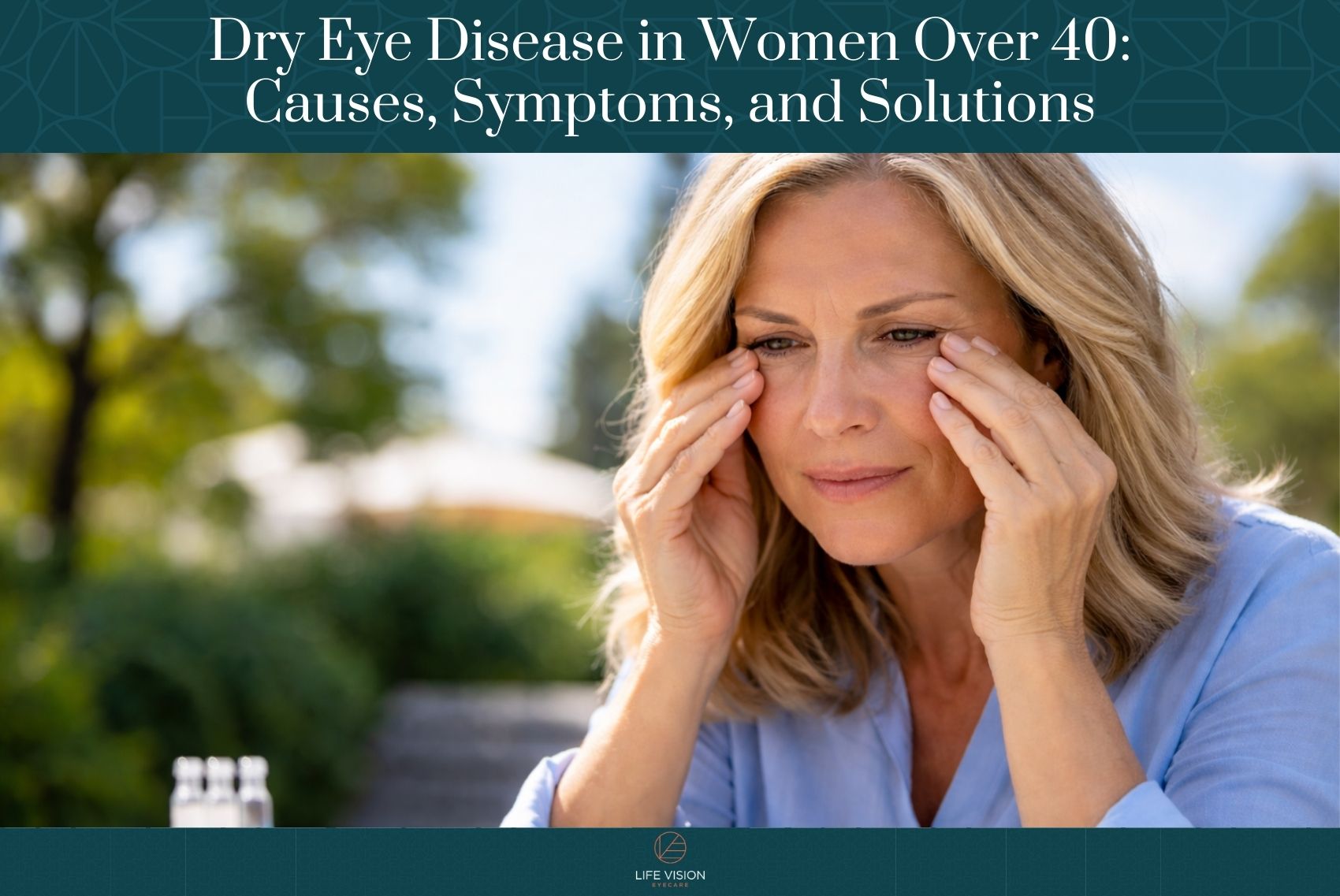
Dry, irritated eyes are more than just a nuisance—they can interfere with daily activities, productivity, and overall quality of life. Dry Eye Disease (DED) is especially common among women over the age of 40, and its prevalence continues to rise with age. Hormonal changes, lifestyle factors, and underlying health conditions all play a role in why women are disproportionately affected.
At Life Vision Eyecare, we specialize in diagnosing and treating dry eye disease using modern technology and personalized care plans to help patients find long-lasting relief.
Why Are Women Over 40 More Prone to Dry Eye Disease?
Dry Eye Disease occurs when the eyes do not produce enough tears or when tears evaporate too quickly. For women over 40, several factors increase the risk:
Hormonal Changes
Estrogen and androgen levels shift during perimenopause and menopause, directly impacting tear production and the function of oil-producing meibomian glands. Reduced oil in tears leads to faster evaporation and increased dryness.
Aging Tear Glands
As we age, tear glands naturally become less efficient, resulting in fewer and poorer-quality tears.
Screen Time and Digital Eye Strain
Many women balance work, family, and personal responsibilities that involve prolonged screen use, which reduces blinking and worsens dry eye symptoms.
Autoimmune and Systemic Conditions
Conditions such as thyroid disease, rheumatoid arthritis, and Sjögren’s syndrome are more common in women and are closely linked to chronic dry eye.
Environmental and Lifestyle Factors
Heating systems, air conditioning, contact lens wear, makeup use, and certain medications (such as antihistamines and antidepressants) can all contribute to dryness.
Common Symptoms of Dry Eye Disease
Dry Eye Disease doesn’t always feel “dry.” Symptoms can vary and may include:
- Burning or stinging sensations
- Gritty or sandy feeling in the eyes
- Redness or irritation
- Blurred or fluctuating vision
- Excessive tearing (a reflex response to dryness)
- Eye fatigue or heaviness
- Discomfort when wearing contact lenses
If left untreated, dry eye can lead to inflammation, damage to the eye surface, and ongoing visual discomfort.
How Life Vision Eyecare Treats Dry Eye Disease
At Life Vision Eyecare, dry eye is not treated with a one-size-fits-all approach. We focus on identifying the root cause of your symptoms and tailoring treatment accordingly.
Complete Dry Eye Evaluation
Our dry eye assessments may include:
- Meibomian gland imaging and evaluation
- Tear quality and quantity testing
- Ocular surface health analysis
- Corneal sensitivity testing
- Comorbidities, lifestyle, and medication review
Customized Treatment Options
Depending on the cause and severity of your dry eye, treatment may include:
- In-office procedures for meibomian gland dysfunction
- OptiLight Intense Pulse Light (IPL) therapy
- OptiPLUS Radiofrequency (RF) therapy
- Omega-3 supplementation and nutrition guidance
- Eye cosmetics guidance
- Warm compress therapy and lid hygiene
- Prescription anti-inflammatory eye drops
- Environmental and lifestyle modifications
Our goal is long-term symptom relief, not just temporary comfort.
Q&A: Dry Eye Disease in Women Over 40
Q: Is dry eye disease a normal part of aging?
A: While dry eye becomes more common with age, it is not something you should simply tolerate. Proper diagnosis and treatment can significantly improve comfort and vision.
Q: Why do my eyes water if they’re dry?
A: Excessive tearing is often a reflex response to irritation. These tears lack the proper oil layer, so they don’t adequately lubricate the eyes.
Q: Can menopause cause dry eyes?
A: Yes. Hormonal changes during menopause are one of the leading contributors to dry eye disease in women over 40 and 50.
Q: Do over-the-counter eye drops fix dry eye?
A: Artificial tears can temporarily alleviate eye irritation, but they are not meant to treat any eye condition. Dry eye is a chronic eye condition that often worsens over time. Chronic dry eye usually requires targeted treatment.
Q: Can dry eye affect my vision?
A: Absolutely. An unstable tear film can cause blurred or fluctuating vision, eye strain, and difficulty reading or driving—especially at night.
Q: How do I know if my dry eye is serious?
A: If symptoms persist, worsen, or interfere with daily life, it’s time for a professional evaluation. Chronic dry eye can damage the eye surface if untreated.
Q: How often should I be evaluated for dry eye?
A: An annual eye exam evaluates all structures of the eye, including signs of dry eye. However, an annual eye exam is not dedicated to addressing the complexity of dry eye. Patients with ongoing symptoms should schedule a complete dry eye exam in addition to their annual dilated eye exam.
Take Control of Your Eye Comfort
Dry Eye Disease doesn’t have to be a constant frustration. With the right diagnosis and a personalized treatment plan, relief is possible. If you’re a woman over 40 experiencing persistent eye discomfort, Life Vision Eyecare is here to help.
Contact Information
Life Vision Eyecare
5770 Red Arrow Hwy
Stevensville, MI 49127
📞 Phone: (269) 367-2626
🌐 Website: lifevisioneyecare.com
📅 Book an Appointment: CLICK HERE