



Never heard of dry eye disease (DED)? You’re not alone, yet it is one of the most common eye diseases. It is estimated to affect up to 30 million Americans. Many cases go undiagnosed, with surveys indicating that while 50% of people may experience symptoms, only 1 in 5 may have a formal diagnosis.
It takes an experienced eye doctor to diagnose and manage DED. Symptoms may include: burning, tearing for no reason, fluctuating vision, feeling of sand or grit in the eyes, stinging, sharp pain in the eye and more.
There are many causes and risk factors of DED and unfortunately there is no cure. Dr. Cooper has over 15 years of experience in treating DED and can discuss causes, risk factors, comorbidities and how to manage your symptoms to provide the comfort and vision you need for your daily life.
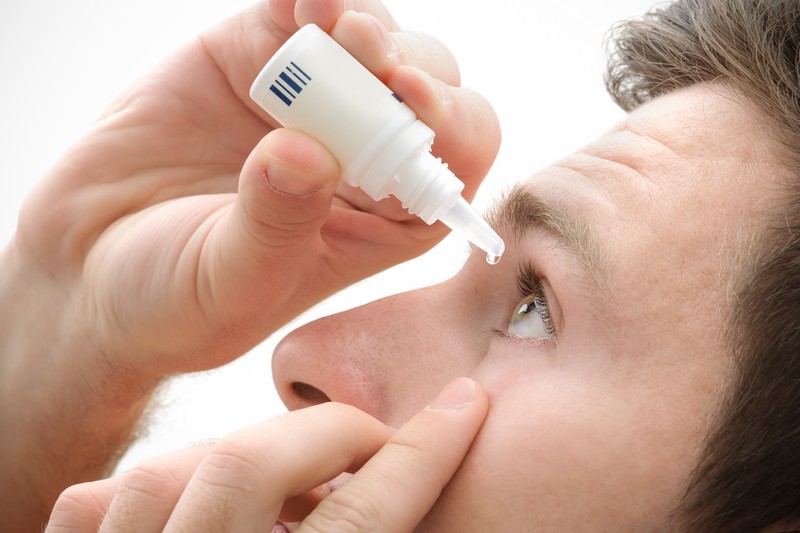
What is Dry Eye Disease?
Dry Eye Disease is complex and researchers are only scratching the surface. The root of Dry Eye Disease is a viscous cycle of inflammation due to a poor tear film. The tear film is either poor quality (not made of the right components) or poor quantity (not enough of it). The poor tear film causes damage to the ocular surface.
If left untreated it will progressively worsen to caused consistent blurred vision and chronic eye pain and irritation.
Dry Eye Disease is most common in 50 years and older; however, we are seeing a sharp increase in younger populations due to excessive device and computer use.

Symptoms of Dry Eye Disease:
- Consistent blurred vision, objects are never quite clear or distinct anymore
- Feeling of grit or sand in eyes
- Burning, stinging, irritation
- Spontaneous watering of eyes
- Tired or fatigued eyes
- Mucus/crusting upon waking
- Fluctuating vision
- Multiple pairs of glasses made which do not quite work correctly
- Loss of ocular sensation (Neurotrophic Keratitis)
Often people believe they have allergies or sinus issues affecting their eyes, when reality it is Dry Eye Disease.
What Happens If It Isn’t Treated?
Dry Eye Disease will progress over time and worsen. It rarely causes blindness, but it can lead to a significant decrease in quality in life.
Multiple studies show Dry Eye Disease significantly impacts daily life and reduces work productivity. Dry Eye Disease is noted to be more impairing than migraine, rheumatoid arthritis, fibromyalgia, and many others.
Dry Eye Disease starts very mild at first, bothering the person infrequently. If not treated it becomes more frequent, to weekly, to daily.
It is much easier to treat Dry Eye Disease in the earlier stages. Treating Dry Eye Disease in the later stages can be successful; however, success can be limited and often requires frequent therapies and monitoring to maintain the condition.

What is a Dry Eye Disease Exam?
A Dry Eye Disease exam is dedicated to finding the cause of your dry eye and comorbidities. Did you know there are 9 different types of Dry Eye Disease? Nine! In order to effectively treat, we conduct an exam dedicated to find the root causes.
A complete dry eye exam may include: infrared photographs of your tear glands (Meibomian glands), corneal sensitivity testing, quality and quantity of tear glands and tears, eyelid structure and function, ocular surface damage and deformity, eyelash microbial and demodex mite growth.
Nine Types of Dry Eye Disease
Aqueous Deficient Dry Eye
A reduction in the biochemical water layer of the tear film produced by the lacrimal gland.
Evaporative Dry Eye
A reduction in the oil layer of the tear film usually due from loss of Meibomian glands.
Mixed Dry Eye
A combination of Aqueous and Evaporative Dry Eye
Autoimmune Dry Eye
Originates from chronic inflammatory conditions such as rheumatoid arthritis, Sjogren’s Syndrome, Lupus, thyroid, and many others.
Contact Lens-Induced Dry Eye
Contact lenses may disrupt the tear film, cause Meibomian gland loss or cause mechanical irritation to the ocular surface.
Environmental Dry Eye
Caused by ow humidity, wind, smoke, air pollution and prolonged exposure blowing air.
Neuropathic Dry Eye
This type of dry eye is often triggered by nerve traumas, becoming persistent over time. This condition often presents a formidable challenge to conventional dry eye syndrome treatments, with many patients experiencing limited relief.
Neurotrophic Dry Eye
Is a reduced or absent corneal sensitivity due to damage or dysfunction of the trigeminal nerve caused by prolonged and untreated Dry Eye Disease. The trigeminal nerve plays a crucial role in maintaining the health and integrity of the cornea by regulating the production of tears, blinking, and other protective mechanisms
Iatrogenic Dry Eye
Caused by medications and medical treatments, such as antihistamines, decongestants, chemotherapy, and laser eye surgery (e.g., LASIK)

How To Treat?
After a dedicated Dry Eye Exam is completed, your doctor will know which therapy is most effective at treating your type(s) of dry eye.
LID HYGIENE
A non-prescription daily cleaning routine to reduce the bacterial load and demodex mite load on your eyelids and eyelashes. A long standing bacterial or demodex mite load on the eyelids and lashes can slowly destroy Meibomian tear glands and create further dry eye signs and symptoms. There are many over-the-counter lid hygiene products; however, there are only a few that are regarded to work effectively and safely. Talk to us about which lid hygiene products have been studied and clinical proven to reduce inflammation, kill bacteria and demodex mites.
OMEGA-3 SUPPLEMENTS
Majority of the oils found in our Meibomian glands are Omega-3; however, Americans severely lack in fish intake. Supplementation is recommended to maintain our Meibomian gland health. Not all fish oils are made alike. In fact, a vast majority of fish oils bought over the counter are not absorbed into our gut properly and therefore do not provide any therapeutic benefit. It takes 3 months of a daily high-grade Omega-3 supplementation to feel relief. Talk to us about which Omega-3 brands have been studied and proven to be absorbed properly and provide dry eye relief.
OVER THE COUNTER EYE DROPS
Over the counter eye drops are not approved to treat any eye disease. Dry eye is an eye disease which is characterized by chronic inflammation that leads to tissue damage of the ocular surface and eyelids. In general, over the counter eye drops are not enough to control dry eye disease. They can provide relief in dry eye symptoms; however, the symptom relief is temporary and not long lasting because over the counter eye drops do not treat the eye disease. In general, over the counter drops should not be used as a lone therapy to treat dry eye disease.
PRESCRIPTION EYE DROPS
There are prescription eye drops used to control the inflammation of the surface of the eye. Some are more effective than others. Some are not accepted by insurance until after you show your insurance company you have tried their recommended treatment. Prescription eye drops are used to treat the surface of the eye and control the inflammation. They cannot treat Meibomian tear gland dysfunction, and it is estimated that 85% of dry eye patients have Meibomian tear gland dysfunction. Prescription eye drops do require you to put in one drop at least twice a day, every day to be effective. Symptom relief can be as short as 8 weeks or as long as 6 months to begin working.
INTENSE LIGHT THERAPY (IPL)
Lumenis OptiLIGHT®
IPL is a non-laser therapy which uses intense pulses of non-coherent light distributed over a range of wavelengths. IPL is most effective in patients with evaporative dry eye due to Meibomian tear gland dysfunction, and it is estimated that 85% of dry eye patients have Meibomian tear gland dysfunction. The light energy initiates multiple therapeutic effects such as: reduces inflammation, closes abnormal small blood vessels that feed ongoing inflammation, decreases populations of demodex mites and bacteria that worsen gland obstruction, stimulates the Meibomian glands by heating and loosening hardened oils which improves gland secretion and tear film stability. Talk to us about IPL and our device, Lumenis OptiLIGHT®, which is the only FDA approved IPL to treat dry eye symptoms from Meibomian gland dysfunction.
RADIOFREQUENCY (RF)
Lumenis OptiPLUS®
RF is a non-laser therapy using radiofrequency technology to treat dry eye secondary to Meibomian gland disease. Dual frequency Radiofrequency (RF) describes the use monopolar RF to increase vascular circulation and reduce obstruction of the Meibomian glands which helps increase meibum expression. RF is most effective in patients with evaporative dry eye due to Meibomian tear gland dysfunction, and it is estimated that 85% of dry eye patients have Meibomian tear gland dysfunction. The RF energy initiates multiple therapeutic effects such as: heating Meibomian glands to melt hardened secretions and liquefy thickened oils to improve tear film stability and improve blood flow and circulation which increases more oxygen and nutrients to gland tissue and helps reduce inflammation. Lumenis OptiPLUS®, an FDA cleared device, is unlike simpler heating methods because it’s dual-frequency RF penetrates deeper gland and tissue layers to stimulate collagen and blood flow. OptiPLUS® RF is often used alongside OptiLIGHT® IPL as this combination addresses dry eye disease at multiple physiological levels, rather than simply masking symptoms.
MEIBOMIAN GLAND EXPRESSION
Meibomian gland expression is technique used by clinicians to manually express the Meibomian glands. This technique is not painful and can be done quickly. It is most effective when performed in conjunction with Lumenis OptiLIGHT® and Lumenis OptiPLUS®. Expressing the glands rids the glands of thickened oils, inflammatory debris, demodex mite and bacteria populations, hardened skin cells (keratinized) debris, and ultimately inflammation and its byproducts. Using heat alone (heating masks) only softens the hardened oils, it does not evacuate it. Once cleared, the glands can resume normal secretion during blinking which in turn stabilizes the tear film and treats the dry eye at its root.
PROKERA® AMNIOTIC MEMBRANES
Prokera® membranes are therapeutic devices made from amniotic membrane tissue which has natural anti-inflammatory and anti-scarring properties. Prokera® is a FDA cleared device used by eye care practitioners to provide quick symptom relief and reduce inflammation associated with dry eye and neurotrophic keratitis. It helps restore your cornea and return your eye to a normal, healthy state. Relief can be felt in less than 5 days for each eye.
OTHER THERAPIES
There are many other therapies that Life Vision Eyecare offers to treat your Dry Eye Disease which can provide symptom relief. Talk to our doctors at Life Vision Eyecare will discuss the best treatment for you.